Fabrication rarely happens entirely under one roof. A job leaves the floor for machining, comes back, goes out again for plating or galvanizing, and returns for final assembly. Each trip out is necessary. Each trip out is also a moment where the factory loses sight of its own material. For an operations manager, those blind spots add up to one of the hardest problems in the plant: tracking job work. So, today we will talk about – Why Do Most Indian Fabrication Units Struggle With Job Work Tracking??
The trouble is that job work tracking usually lives in challans, vendor registers, and the storekeeper’s memory. As long as one person remembers what went where, it holds together. As volume grows and more vendors come on board, teams struggle to reconcile job work accurately. Missing material often goes unnoticed, vendors receive payments for returns that do not match dispatches, and production teams face delays while they search for parts they cannot locate.
Losing track of material once it leaves the floor? Book an ERPKaro demo to see how job work tracking keeps every outsourced step accounted for.
Understanding the Problem with Job Work Tracking
Job work tracking means following material and work that moves to an outside vendor for a process and then comes back. A complete record answers four questions: what did you send, what should return after processing, what actually came back, and what did you lose or scrap along the way? Recording all four against the same job keeps outsourced work fully accounted for. When they are not, control breaks down.
The breakdown is structural. Material physically leaves the factory, so the floor cannot see it. The paperwork that should track it is fragmented. A challan records the dispatch, a separate register records the receipt, and the link between them depends on someone matching the two by hand. Process loss, the expected yield difference after machining or coating, is rarely recorded at all, so genuine loss and theft look identical.
Add multiple vendors, multiple processes per part, and partial returns, and the manual approach simply cannot keep the four questions answered.
Why This Problem Becomes Expensive Over Time?
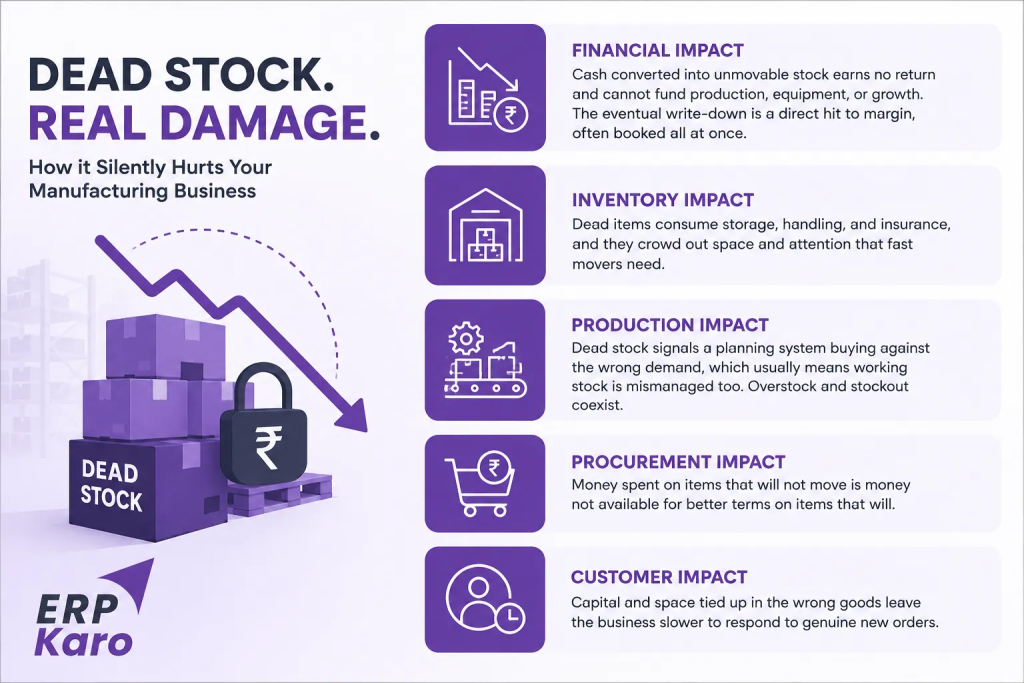
Untracked job work drains money in ways that are hard to see.
- Inventory impact: material that left the floor still belongs to the factory, but it disappears from any usable stock figure. Inventory accuracy falls, and write-offs grow as unreconciled job work surfaces at year-end.
- Production impact: when the floor cannot see where a part is in the outsourced cycle, planning cannot commit dates. Production stalls waiting for returns that are late or unaccounted for.
- Procurement and vendor impact: without expected-versus-actual returns, vendors may be paid for quantities that never came back, and process loss cannot be challenged.
- Customer impact: delays in the outsourced loop push out delivery dates and erode on-time-in-full performance.
- Financial impact: loss inside the job work cycle is often discovered only at the annual stocktake, booked as a single unexplained variance that nobody can trace back to a cause.
Warning Signs Operations Leaders Should Watch For
- No single record shows where outsourced material currently sits.
- Returned quantities are reconciled by hand against challans.
- Process loss is assumed rather than measured.
- Production waits for parts that are out for job work with no clear return date.
- Vendor payments are hard to verify against actual returns.
- The annual stocktake reveals job work variances no one can explain.
How Leading Manufacturers Address This Challenge?
Fabricators who keep control of job work treat it as part of the production flow, not as separate paperwork. Each dispatch and receipt is recorded against the specific job, ensuring sent and returned quantities always tie back to a single record. For every operation, teams define expected returns and process loss, making genuine loss visible and preventing theft from hiding within it. By linking the outsourced step to the work order, planners can see where a part is in the cycle and when it is due back.
Most importantly, they keep one shared record rather than relying on memory or scattered registers. So the four questions stay answered as volume and vendors grow.
If outsourced material keeps slipping out of view, book an ERPKaro demo to see job work tracked end to end against each work order.
How Technology and ERP Systems Help?
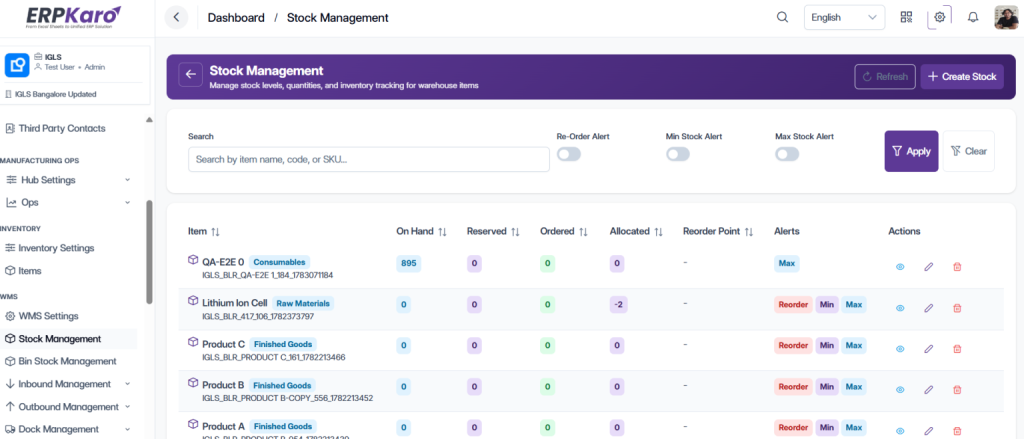
A job work ERP closes the visibility gap that paper registers leave open. Every dispatch and receipt is recorded against the job, with expected and actual returns tracked side by side. Outsourced steps link to the work order, so the floor sees where material is and when it is due. Process loss is recorded per operation, so real yield is measured rather than guessed. Inventory reflects material that is out for job work, so accuracy holds.
ERPKaro brings work order management, inventory management, vendor management, and shop floor visibility into one system for small and mid-sized manufacturers. For an operations manager, the result is outsourced work that stays accounted for and a floor that can finally see beyond its own walls.
A Realistic Manufacturing Example
Consider a mid-sized fabrication unit that outsources machining and plating to several vendors.
- Before: job work lived in challans and registers, returns were reconciled by hand, and process loss was assumed.
- Problems: material went missing in the outsourced loop, vendors were paid for quantities that did not fully return, and the stocktake produced large job work variances.
- Actions taken: the unit recorded every dispatch and receipt against the job, set expected returns and process loss per operation, and linked outsourced steps to work orders.
Results: over two quarters, job work variances fell, vendor reconciliation became straightforward, and production stopped stalling on lost parts. These figures illustrate the typical pattern rather than a guaranteed result.
Key Metrics Every Operations Leader Should Track
- Job work reconciliation rate (expected versus actual returns)
- Process loss by operation and vendor
- Material currently out for job work, by value
- On-time return rate from job work vendors
- Inventory accuracy including outsourced material
- WIP held in the outsourced cycle
Key Takeaways
Job work tracking breaks down because material leaves the building while the records stay scattered. The business loses material, makes unverified vendor payments, and faces stalled production, often discovering these issues only at year-end. One shared record connects every dispatch, return, and process loss to the job, giving teams the same visibility into outsourced work as they have on their own production floor.
Conclusion
Outsourcing is essential to fabrication, but it should not mean losing sight of your own material. As order volume rises and more vendors join the loop, the blind spots multiply, and the year-end variance grows with them.
If outsourced work is creating blind spots in your plant, book a personalized ERPKaro demo and talk to our team to see how fabricators keep every job accounted for.
Frequently Asked Questions
What is job work tracking in fabrication?
Job work tracking follows material and work that moves to an outside vendor for a process such as machining, plating, or cutting, and back again. It records what was sent, what should return, what actually returned, and any loss along the way, so outsourced steps stay accounted for.
Why is job work so hard to track?
Material physically leaves the factory, so the floor loses sight of it. Records sit in challans, registers, and memory rather than one system. Without a shared record of sent, expected, and returned quantities, reconciliation becomes guesswork and material loss goes unnoticed.
What goes wrong when job work is not tracked properly?
Material is lost or written off without anyone noticing, vendors are paid for work that does not match returns, and production stalls waiting for parts no one can locate. Compliance records for outsourced material also become unreliable, which creates problems at audit time.
How does a job work ERP improve tracking?
It records every dispatch and receipt against the job, tracks expected versus actual returns, and links outsourced steps to the work order. The floor can see where material is, reconcile vendor quantities, and account for loss, all from one system instead of scattered challans.
Can small fabrication units use a job work ERP?
Yes. Affordable, focused systems are built for small and mid-sized fabricators. A phased rollout starting with job work and inventory keeps disruption low while giving immediate control over outsourced material that paper registers cannot provide.
Related reading
Losing track of material once it leaves the floor? Book an ERPKaro workflow demo to see how job work tracking keeps every outsourced step accounted for.