Ask a plant head where every job is right now, at this minute, and most will give an honest answer: roughly, but not exactly. They know the floor is busy. They know which big orders are in the system. What they usually cannot see, in real time, is work-in-progress: which jobs have started, where each one is stuck, and what is quietly piling up between stages. This makes us write a deep overview on Why Plant Heads Rarely Have Real-Time Visibility of WIP Inventory?
This is not a failure of attention. It is a failure of information. Work-in-progress moves continuously across machines and shifts, but the data about it is captured slowly, on paper or by memory. By the time it becomes a report, the floor has already moved on.
Cannot see where your jobs are stuck? See a live ERPKaro shop floor demo to track work-in-progress in real time and act before delays reach the customer.
Problem of Lack of Real-Time Visibility of WIP Inventory
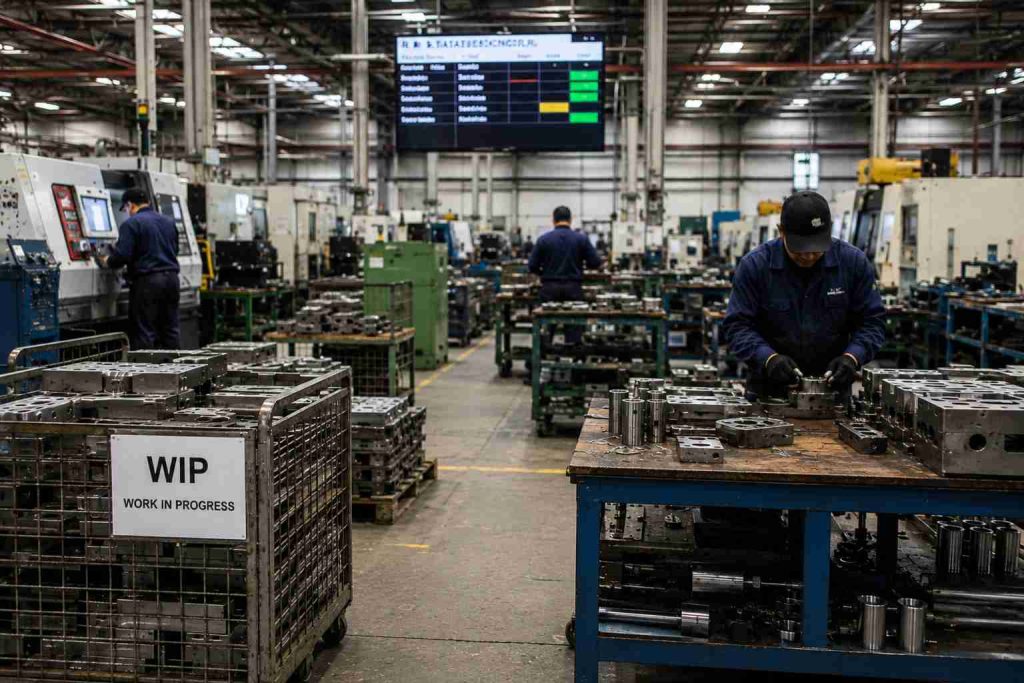
Work-in-progress is everything that has entered production but has not yet been finished and moved to stores. It is the most dynamic inventory in the factory, and the hardest to see.
The reason visibility breaks is structural. A job moves from cutting to machining to assembly to finishing, and at each handoff its status depends on someone updating a job card or telling a supervisor. Those updates are batched, delayed, or skipped during a busy shift. So the plant head is always looking at a picture that is a few hours, or a day, behind reality. When the picture is stale, the plant head manages by walking the floor, which does not scale as volume grows.
Why This Problem Becomes Expensive Over Time?
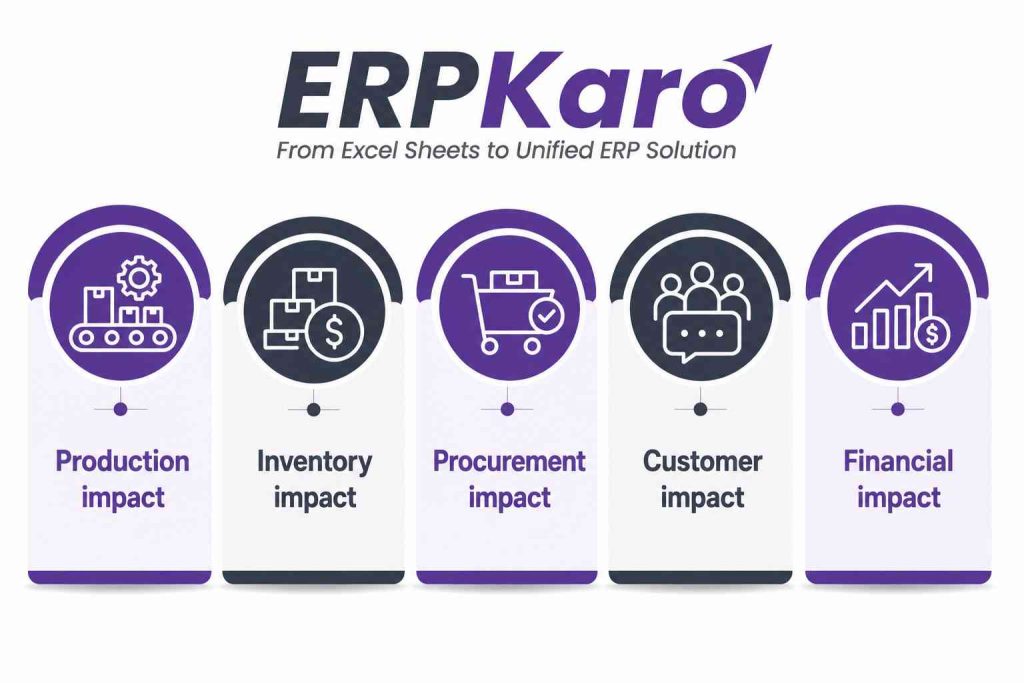
The cost shows up across the operation.
- Production impact: jobs stall between stages without anyone noticing until it is too late to recover the schedule. Bottlenecks form silently and starve later stages.
- Inventory impact: work-in-progress is cash in a half-finished state. When it grows unseen, capital is locked in incomplete goods that cannot be shipped or sold.
- Procurement impact: without clear WIP status, it is hard to know which jobs truly need material next, so purchase timing drifts and shortages appear at the wrong stage.
- Customer impact: status updates to sales and customers become guesses. The first reliable signal that a job is late is often the missed delivery itself.
- Financial impact: longer effective lead times, higher WIP, and reactive expediting all raise cost while lowering throughput.
Industry benchmarks vary, but in many factories a large share of total lead time is simply waiting time between stages, not actual processing. That waiting is invisible without live WIP tracking.
Warning Signs Manufacturing Leaders Should Watch For:
- The plant head learns a job is late only when the customer asks.
- Status meetings rely on people recalling where jobs stand.
- Work piles up between two stages while a later stage waits.
- Job cards are updated in batches, often at the end of a shift.
- Two supervisors give different answers about the same job.
- Expediting starts only after a delay has already happened.
How Leading Manufacturers Address This Challenge?
The shift is from walking the floor to seeing the floor. Leading manufacturers capture job status at each stage as work actually moves, not hours later. They make that status visible on a live view, so the plant head can spot a stalled job or a forming bottleneck immediately. They use that early signal to rebalance work before the schedule breaks, rather than expediting after it has.
When WIP is visible, management shifts from reacting to delays to preventing them.
Want to see your floor in real time instead of reconstructing it from memory? Request an ERPKaro shop floor demo.
How Technology and ERP Systems Help?
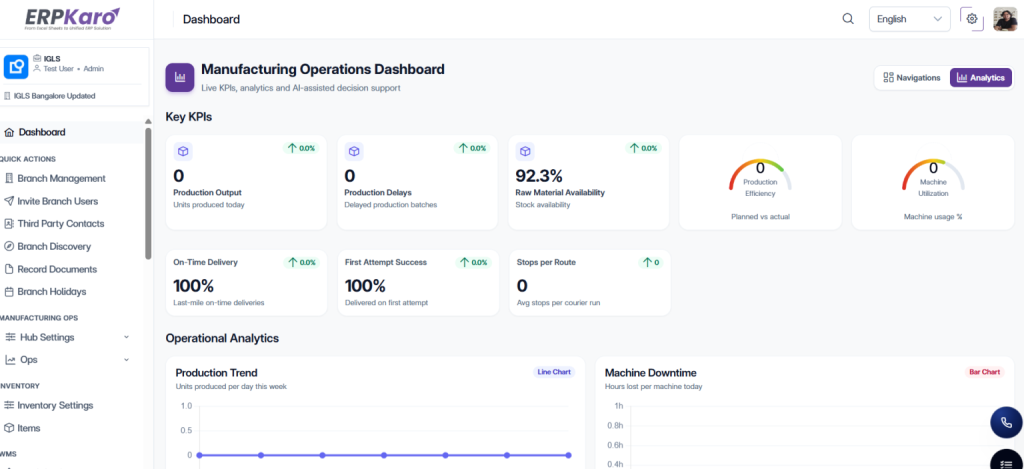
A shop floor ERP captures work-in-progress as it happens. Each job records its stage and status through simple entry at key points, so the data is timely and reliable. A live shop floor view shows where every job is and where work is accumulating. Production scheduling uses that live status to keep the right jobs moving and the bottleneck fed. Analytics reveal where lead time is actually lost, so improvement targets the real constraint.
ERPKaro combines shop floor visibility, production scheduling, and analytics for small and mid-sized manufacturers. The value for a plant head is simple: the floor stops being a black box.
A Realistic Manufacturing Example
Consider an engineering manufacturer running multi-stage jobs across several machines.
Before: WIP status lived on paper job cards, and the plant head reconstructed the floor each morning by walking it.
Problems: jobs stalled between stages unnoticed, the bottleneck was discovered only after delays, and customer status updates were unreliable.
Actions taken: the manufacturer captured stage updates live at each handoff and put WIP on a real-time view.
Results: stalled jobs were caught early, effective lead time was shortened, and on-time delivery improved as the plant head intervened before delays reached the customer. WIP held steady instead of creeping up. These figures show the usual direction of improvement, not a fixed outcome.
Key Metrics Every Manufacturing Leader Should Track
- Work-in-progress levels by stage
- Effective lead time versus actual processing time
- Bottleneck utilization
- Job stage cycle time
- On-time-in-full delivery
- Time to detect a stalled job
Key Takeaways
You cannot manage what you cannot see, and work-in-progress is the hardest inventory to see. The problem is not effort, it is timing: status captured late is status that cannot be acted on. Live WIP visibility turns the floor from a daily reconstruction into a real-time picture a plant head can steer.
Conclusion
Work-in-progress is where factory time and cash quietly accumulate. Without real-time visibility, delays are discovered too late and capital sits locked in unfinished goods. As order volume and complexity grow, the cost of a blind spot on the floor grows with it.
If you are managing the floor from memory and finding out about delays too late, see a live ERPKaro shop floor demo to track work-in-progress in real time and keep your commitments.
Frequently Asked Questions
What is WIP inventory and why does it matter?
Work-in-progress is everything that has started production but is not yet finished. It matters because it ties up material, labor, and cash, and because it is the clearest early signal of whether the floor is flowing or stalling.
Why can’t most plant heads see WIP in real time?
WIP status usually lives in people’s heads and on paper job cards. By the time it is collected into a report, it is already out of date. Without live capture at each stage, the plant head sees yesterday’s picture, not today’s.
How does poor WIP visibility cause delays?
If you cannot see where a job is stuck, you cannot intervene in time. Jobs stall between stages, bottlenecks go unnoticed, and the first sign of trouble is a missed delivery rather than an early warning.
Does a shop floor ERP need expensive hardware?
Not necessarily. Many factories start by capturing stage updates through simple terminals or mobile entry at key points. The goal is timely, reliable status capture, not heavy automation.
What changes once WIP is visible live?
Plant heads can spot stalled jobs and bottlenecks as they form, rebalance work, and give accurate status to sales and customers. Lead times shorten and surprises drop.
Related reading
Cannot see where your jobs are stuck? See a live ERPKaro shop floor demo to track WIP in real time and stop delays before they reach the customer.