It is one of the most frustrating problems on a factory floor: delivery delays. The order book is full, the machines are running, the team is working hard, and yet customers still call about late deliveries. From the outside, it looks like a capacity problem. In most cases, it is not. It is a scheduling problem.
A plant can be one hundred percent busy and still miss the orders due this week, because being busy is not the same as making the right things in the right order. When the sequence is wrong, machines run hard on work that is not yet needed while urgent orders wait behind them.
Busy machines but late deliveries? Book an ERPKaro demo to see how production scheduling turns full capacity into reliable, on-time output.
Understanding the Problem
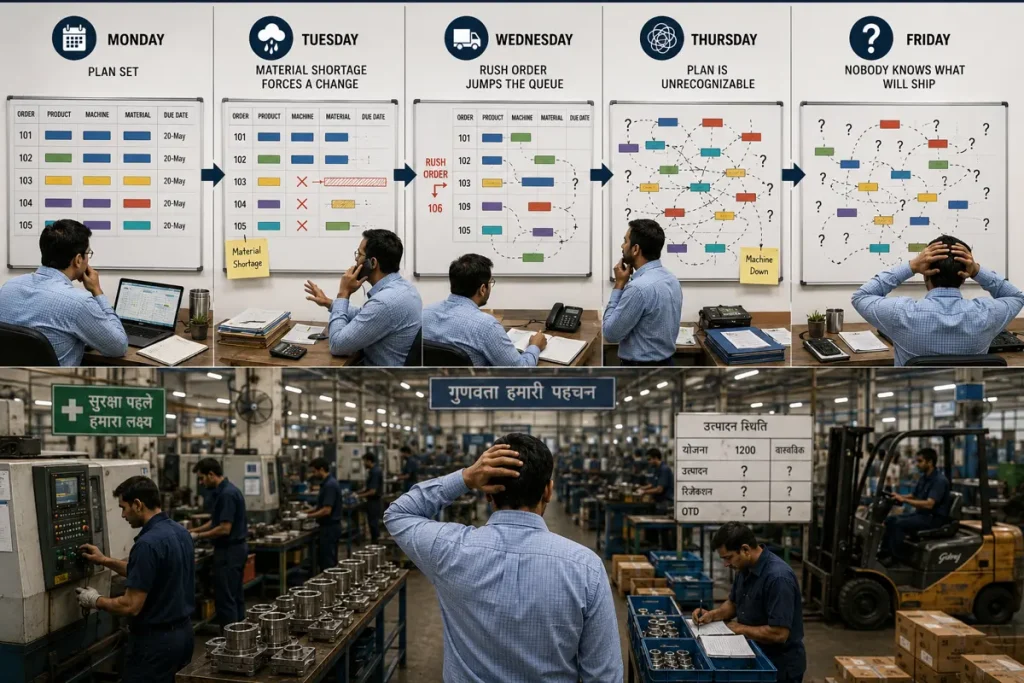
Planning and scheduling are different jobs. Planning answers what to make and roughly when. Scheduling answers the exact order in which jobs run on each machine, and how material and setup line up to support that order.
Many Indian manufacturers plan reasonably well at a high level, then schedule by feel on the floor. A supervisor decides what runs next based on what is in front of them, who shouted loudest, or which setup is already loaded. Each local decision is sensible. Added up across machines and shifts, they pull the plant away from its delivery commitments.
Why This Problem of Delivery Delays Becomes Expensive Over Time
The cost surfaces across the operation.
- Production impact: bottleneck machines, the ones that actually limit output, are not always kept busy with the right work. Time lost at a bottleneck is lost for the whole plant.
- Inventory impact: jobs started too early pile up as work-in-progress, tying capital in half-finished goods while urgent orders stall.
- Procurement impact: when the sequence keeps changing, material is pulled in for the wrong jobs first, which triggers shortages and rush buying for the jobs that are actually due.
- Customer impact: delivery dates become unreliable. For buyers, a supplier who is late despite being busy is harder to plan around than one who is honest about capacity.
- Financial impact: high utilization with low on-time delivery is a costly combination. You are paying full operating cost while losing the revenue and trust that come from reliable shipping.
Industry benchmarks vary, but on-time-in-full performance in the seventies is common for manufacturers who plan but do not schedule tightly. Moving that number up is usually a sequencing problem, not a capacity problem.
Warning Signs Manufacturing Leaders Should Watch For
- Utilization looks high, yet OTIF stays low.
- The next job is decided at the machine, not by a plan.
- Work-in-progress keeps growing while urgent orders wait.
- Bottleneck machines sometimes sit idle or run non-urgent work.
- Expediting and reshuffling are a daily routine.
- Two teams disagree on which order is actually due first.
How Leading Manufacturers Address Delivery Delays?
The shift is from reacting on the floor to scheduling with intent. Leading manufacturers sequence work so that bottleneck machines stay fed with the right jobs. They group similar setups to cut changeover time. They make the schedule visible to every shift, so the floor follows one sequence rather than several local ones. They commit delivery dates only after checking real capacity, not from habit.
The outcome is steadier flow, lower work-in-progress, and delivery dates the sales team can actually promise.
Want to see where your sequence is costing you on-time delivery? Talk to an ERPKaro scheduling specialist for a quick assessment.
How Technology and ERP Systems Help?
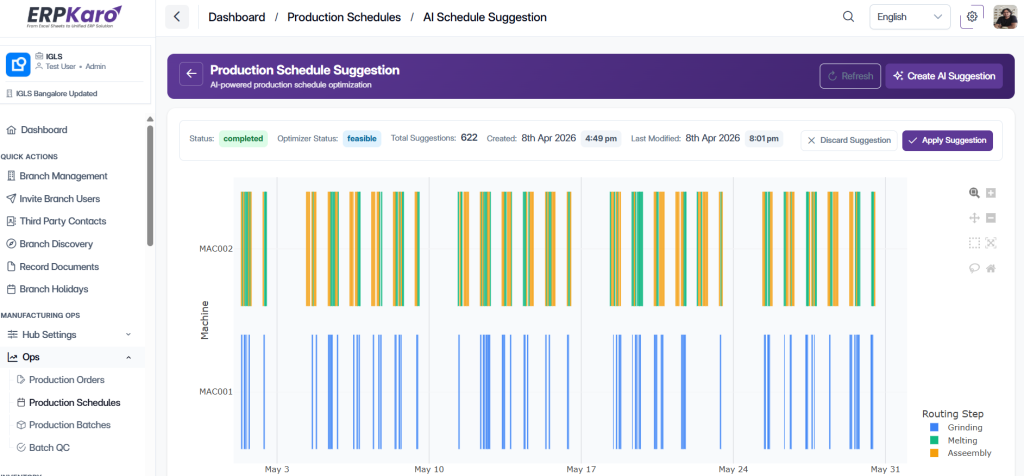
A production scheduling ERP turns sequencing into a managed process. It schedules jobs against real capacity and material availability, so the plan is feasible, not aspirational. It protects bottleneck machines by keeping them loaded with the right work. It exposes the schedule to the floor in real time, so every shift runs the same sequence. AI-assisted scheduling helps resolve conflicts before they reach the line.
ERPKaro combines production scheduling, planning, MRP, and shop floor visibility for small and mid-sized manufacturers. The value is reliability: the date you promise is the date you can keep.
A Realistic Manufacturing Example
Consider a steel fabrication plant with a full order book and strong utilization.
Before: utilization sat above ninety percent, but OTIF hovered around seventy-two percent, and expediting was a daily habit.
Problems: supervisors chose the next job at each machine, work-in-progress kept growing, and the bottleneck cutting line sometimes ran non-urgent work.
Actions taken: the plant adopted scheduling that sequenced jobs against real capacity and kept the bottleneck fed, with the schedule visible to every shift.
Results: OTIF climbed into the high eighties over a few months, work-in-progress fell, and expediting became the exception rather than the rule, all without adding machines. These figures show the usual direction of change, not a fixed result.
Key Metrics Every Manufacturing Leader Should Track
- On-time-in-full delivery
- Bottleneck utilization
- Work-in-progress levels
- Changeover and setup time
- Schedule adherence
- Expedite frequency
Key Takeaways
Being busy is not the same as being reliable. Full capacity with late delivery is almost always a sequencing problem, and sequencing is fixable without buying more machines. The fastest gains come from keeping the bottleneck fed with the right work and giving every shift one schedule to follow.
Conclusion
Delivery reliability is what customers remember, far more than how busy your floor looks. As order volume grows, weak scheduling turns full capacity into missed commitments and rising work-in-progress. Fixing the sequence is one of the cheapest, highest-return moves a plant can make.
If your machines are busy but your deliveries still slip, book a personalized ERPKaro demo to see how production scheduling converts capacity into on-time output.
Frequently Asked Questions
How can a factory be at full capacity and still deliver late?
Full capacity measures how busy the machines are, not whether they are making the right things in the right order. A plant can run flat out on the wrong sequence, so utilization looks high while the orders due this week sit behind work due next month.
What is the difference between planning and scheduling?
Planning decides what to make and when across a horizon. Scheduling decides the exact sequence on each machine. Many factories plan reasonably but schedule poorly, which is why work is busy yet delivery still slips.
Will scheduling software reduce changeovers?
Good scheduling sequences similar jobs together and keeps bottleneck machines fed, which reduces changeover losses and setup time. That recovered time often turns directly into more on-time deliveries.
Does this only apply to large plants?
No. Small and mid-sized plants feel scheduling problems sharply because one delayed job can ripple through the whole week. Affordable scheduling tools exist for this segment.
What metric best tracks delivery reliability?
On-time-in-full, or OTIF, is the clearest measure. It captures both whether you delivered on time and whether you delivered the full quantity, which together reflect real reliability.
Related reading
Busy machines but late deliveries? Book an ERPKaro demo to see how production scheduling turns full capacity into reliable, on-time output.