Every factory has a corner of the warehouse no one talks about. Pallets of a part that was superseded two designs ago. A bulk buy that chased a discount for an order that never repeated. Finished goods for a customer who changed specifications. On the balance sheet, all of it is an asset. In reality, it is dead stock, and it is steadily eating margin. So today, we will talk about – How Dead Stock Quietly Destroys Manufacturing Profit Margins?
For a CFO, dead stock is dangerous because it lies quietly. It does not show up as a loss until the year-end write-down, by which point the cash has been trapped for months and the margin is already gone. The capital that financed it earned nothing while it sat. The storage, insurance, and handling it consumed were paid for in full. Dead stock is one of the clearest examples of profit hidden inside an asset.
How much margin is locked in stock that no longer moves? Request an ERPKaro demo to quantify your dead stock and recover the capital behind it.
The Problem of Dead Stock and Manufacturing Profit Margins
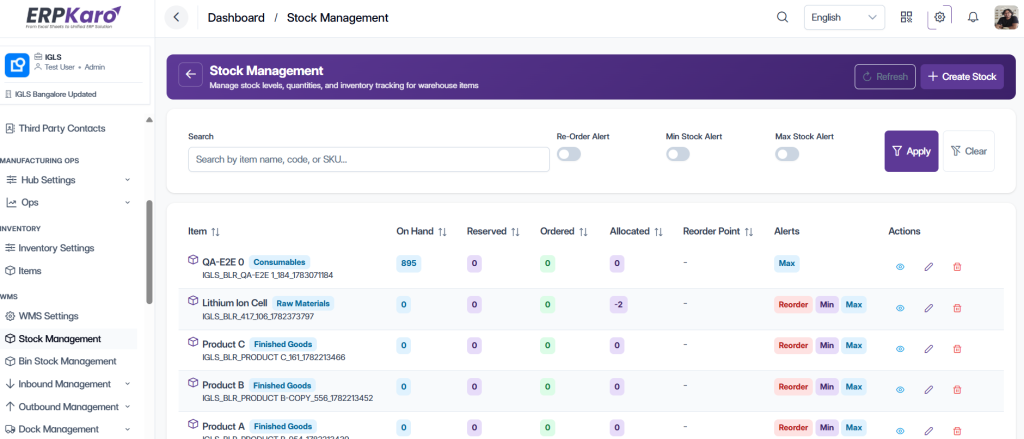
Dead stock is material or finished goods that have stopped moving and will not be used or sold at full value. It is different from working inventory, which turns over, and different from healthy safety stock, which protects production. Dead stock simply sits.
It forms for understandable reasons. A buyer over-orders to avoid a stockout or to chase a volume discount, and demand never absorbs the surplus. A design change leaves the old part obsolete overnight. A canceled or modified order strands finished goods. Minimum order quantities force a purchase larger than the real need. Each decision made sense at the time. The residue accumulates in the warehouse.
The deeper cause is weak demand visibility. When teams cannot see real consumption, they buy against fear rather than need, and the excess that fear creates slowly turns into dead stock.
Also read: Why Inventory Accuracy in Manufacturing Companies Falls Below 80%?
Why Dead Stock Becomes Expensive Over Time?
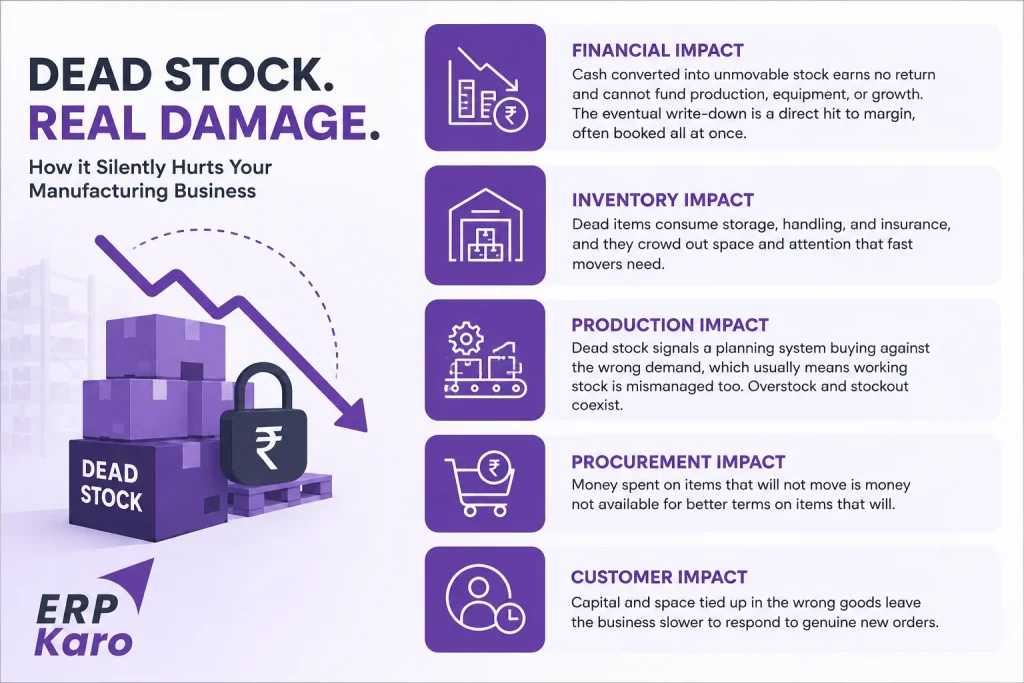
The cost of dead stock compounds long before the write-off appears.
- Financial impact: cash converted into unmovable stock earns no return and cannot fund production, equipment, or growth. The eventual write-down is a direct hit to margin, often booked all at once.
- Inventory impact: dead items consume storage, handling, and insurance, and they crowd out space and attention that fast movers need.
- Production impact: dead stock signals a planning system buying against the wrong demand, which usually means working stock is mismanaged too. Overstock and stockout coexist.
- Procurement impact: money spent on items that will not move is money not available for better terms on items that will.
- Customer impact: capital and space tied up in the wrong goods leave the business slower to respond to genuine new orders.
Warning Signs Finance Teams Should Watch For
- A growing share of stock has not moved in ninety days or more.
- Year-end write-downs are becoming routine rather than rare.
- The warehouse is full, yet fast movers still run short.
- Volume discounts regularly produce a surplus that demand never absorbs.
- Obsolete parts from old designs are still carried at full value.
- No one reviews stock aging until the annual stocktake forces it.
How Leading Manufacturers Address This Challenge?
Manufacturers who protect margin treat dead stock as a managed risk, not a year-end surprise. Here’s what they do:
They review stock aging regularly, so slow movers are caught while they still hold value and can be used, returned, or discounted before they become worthless. At the same time, they classify inventory by value and movement, focusing attention on the dead items that lock up the most cash.
They also attack the source. By linking purchasing to real demand and controlling minimum order quantities, they stop most dead stock from forming in the first place. Prevention costs far less than disposal.
If you want a clear, item-level picture of which stock has stopped earning, request an ERPKaro inventory audit.
How Technology and ERP Systems Help?
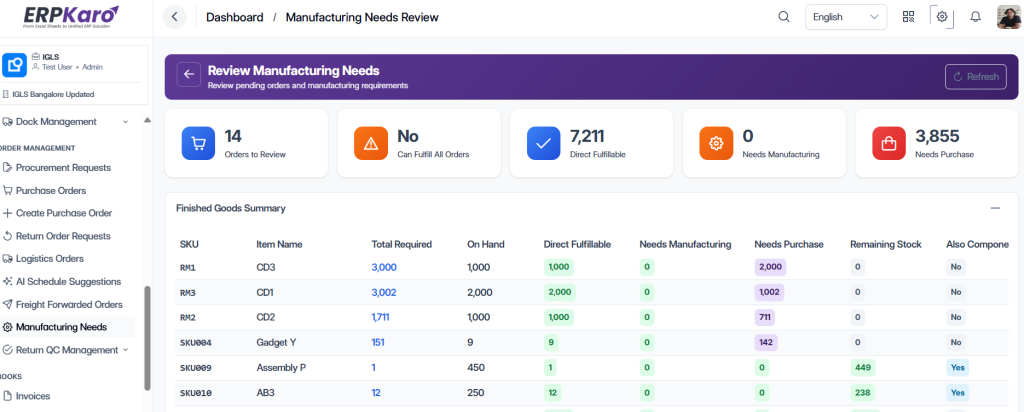
A dead stock management capability inside an ERP makes the invisible visible. Stock aging reports flag items by how long they have sat. Inventory classification ranks dead items by locked-up value. Material requirement planning links new purchasing to real demand, which prevents fresh excess. Analytics translate the dead stock figure into a working capital and margin number that finance can act on.
ERPKaro brings inventory management, MRP, and analytics into one system for small and mid-sized manufacturers. For a CFO, the outcome is dead stock seen early, working capital recovered, and new dead stock prevented at the source.
A Realistic Manufacturing Example
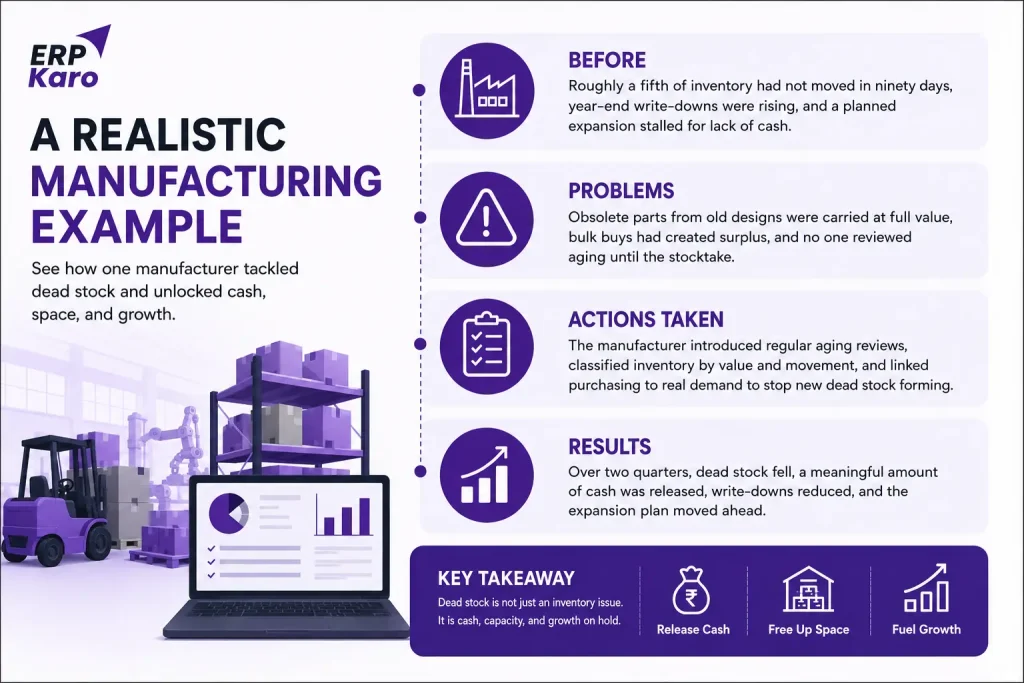
Consider a mid-sized electrical components manufacturer with a full warehouse and tight cash.
- Before: roughly a fifth of inventory had not moved in ninety days, year-end write-downs were rising, and a planned expansion stalled for lack of cash.
- Problems: obsolete parts from old designs were carried at full value, bulk buys had created surplus, and no one reviewed aging until the stocktake.
- Actions taken: the manufacturer introduced regular aging reviews, classified inventory by value and movement, and linked purchasing to real demand to stop new dead stock forming.
Results: over two quarters, dead stock fell, a meaningful share of working capital was freed, and write-downs shrank. These figures illustrate the typical pattern rather than a guaranteed result.
Key Metrics Every Finance Leader Should Track
- Dead stock value as a share of total inventory
- Stock aging (share unmoved in ninety days and beyond)
- Inventory turnover
- Working capital is locked in non-moving inventory
- Write-down value booked per year
- Carrying cost as a share of inventory value
Key Takeaways
Dead stock destroys margin precisely because it looks like an asset. It traps cash, consumes cost, and ends in a write-down that few saw coming. The way out is to review aging regularly, classify by value and movement, and attack the source by linking purchasing to real demand. Prevention protects the margin far more cheaply than disposal recovers it.
Conclusion
For a manufacturing business, margin is hard won and easily lost. Stock that has stopped moving is a margin already leaking, quarter after quarter, hidden inside an asset line. As product range and volume grow, dead stock grows with them unless it is actively managed, and the eventual write-down only gets larger.
If your warehouse is full while cash is tight, request an ERPKaro demo and book a personalized demo to see how manufacturers turn dead stock back into deployable capital.
Frequently Asked Questions
What is dead stock in a manufacturing business?
Dead stock is material or finished goods that have stopped moving and are unlikely to be used or sold at full value. It includes obsolete parts, superseded designs, slow movers, and excess that demand never absorbed. It sits on the balance sheet as an asset while losing value.
Why is dead stock a margin problem and not just an inventory problem?
Dead stock ties up cash that earned no return and eventually gets written down, which hits margin directly. It also consumes storage, handling, and management attention. The loss is real even before the write-off, because the capital could have funded production or growth.
How do I identify dead stock?
Review stock aging and movement. Items with no consumption or sale in a defined period, often ninety days for fast-moving categories or longer for spares, are candidates. Classifying inventory by value and movement shows which dead items lock up the most cash.
Can dead stock be prevented?
Largely, yes. Most dead stock forms from over-ordering against fear, design changes, and poor demand visibility. Linking purchasing to real demand, controlling minimum order quantities, and reviewing aging regularly stops most dead stock from forming in the first place.
How does dead stock management help a CFO?
It surfaces hidden value loss before it reaches the write-off line, frees working capital locked in unmovable items, and prevents new dead stock from forming. For finance, it turns a quiet drain into a managed, measurable part of working capital strategy.
Related reading
How much margin is locked in stock that no longer moves? Request an ERPKaro inventory audit to quantify your dead stock and recover the working capital behind it.