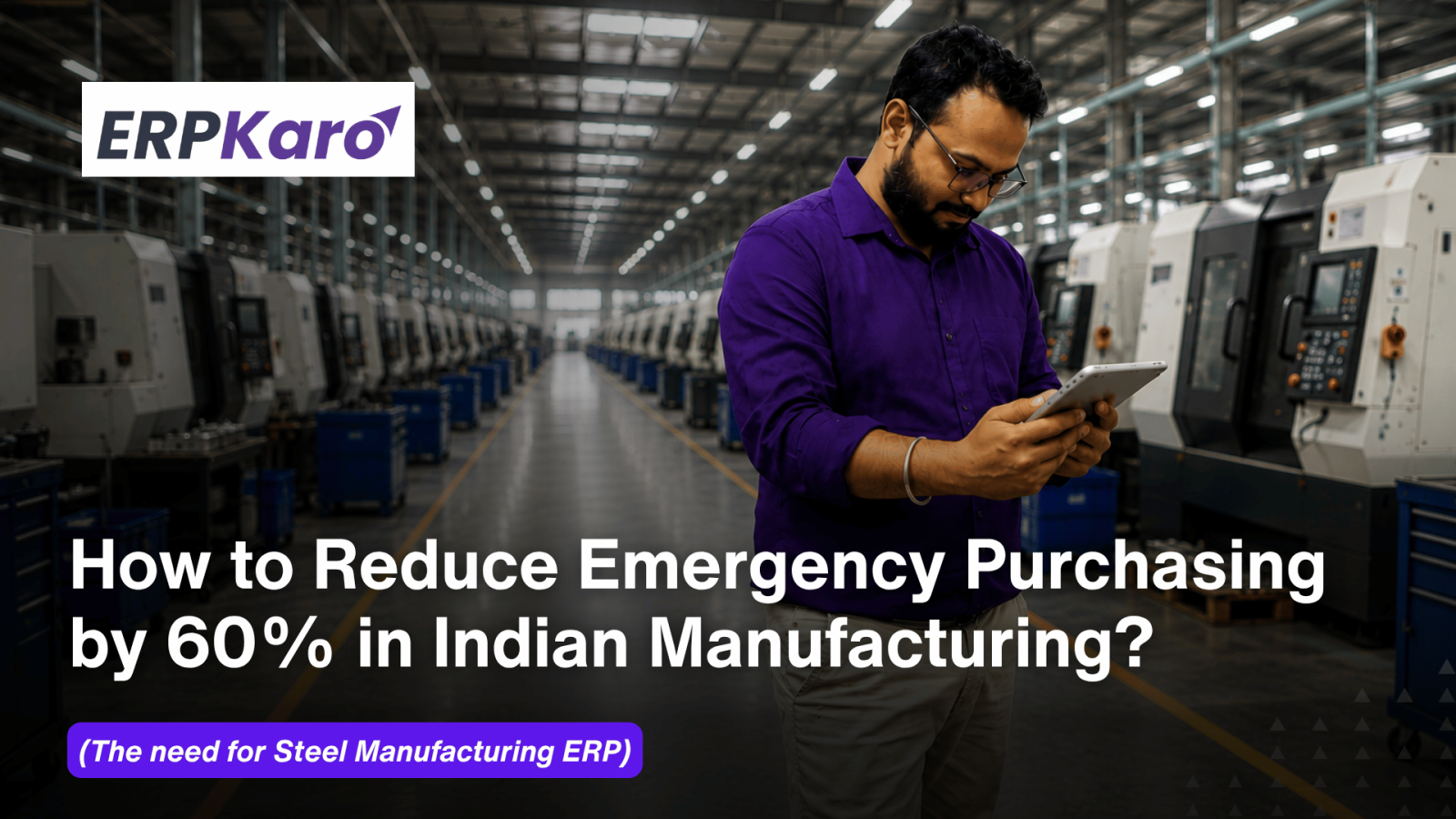
In Indian manufacturing, few things drain a procurement budget as subtly as emergency purchasing. A material runs short on the line, production halts, and a buyer scrambles to find any vendor who can deliver today. The order goes out at a premium price, freight is expedited, and the line restarts. The crisis passes, the cost is buried in the purchase ledger, and the same pattern repeats next week.
For a procurement manager, this is exhausting and expensive. Every emergency buy carries a price premium, lost negotiating leverage, and hours of staff time spent chasing suppliers instead of managing the category. Worse, it signals a planning gap that keeps reopening. The good news is that most emergency purchasing is preventable, and the savings are large enough to notice within a quarter.
If unplanned buying keeps inflating your material cost, book an ERPKaro demo to see how purchase planning replaces firefighting with calm, planned procurement.
Understanding the Problem of Emergency Purchasing in Indian Manufacturing
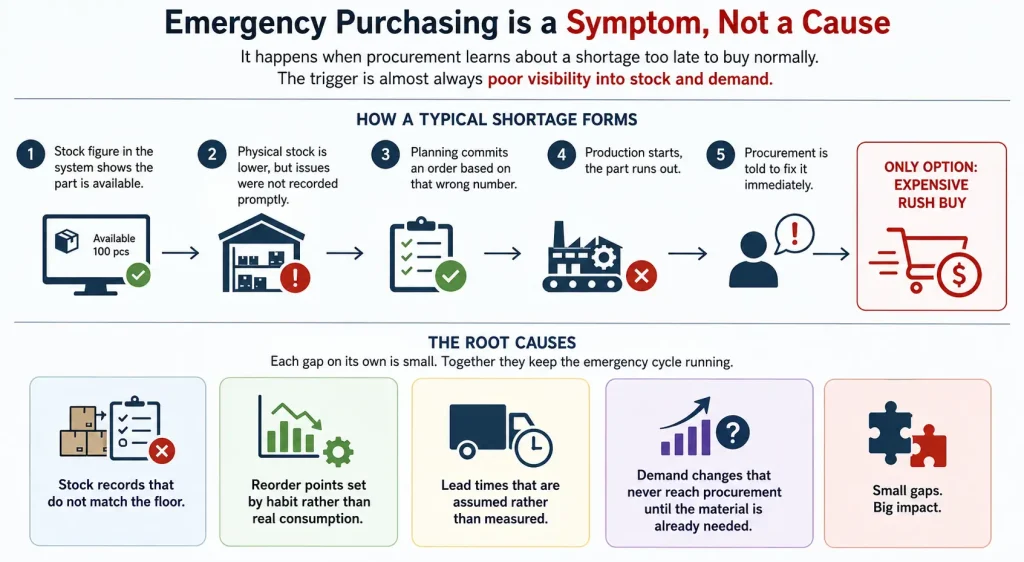
Emergency purchasing is a symptom, not a cause. It happens when procurement learns about a shortage too late to buy normally. The trigger is almost always poor visibility into stock and demand.
Consider how a typical shortage forms. The system shows that a part is available, but the actual stock is lower because staff did not record inventory issues promptly. Planning commits an order based on the wrong number. The production team starts manufacturing, runs out of the required part, and asks procurement to source it immediately. By then, the only option is an expensive rush buy.
The root causes are familiar. Stock records that do not match the floor. Reorder points set by habit rather than real consumption. Lead times that are assumed rather than measured. Demand changes that never reach procurement until the material is already needed. Each gap on its own is small. Together, they keep the emergency cycle running.
Why This Problem Becomes Expensive Over Time?
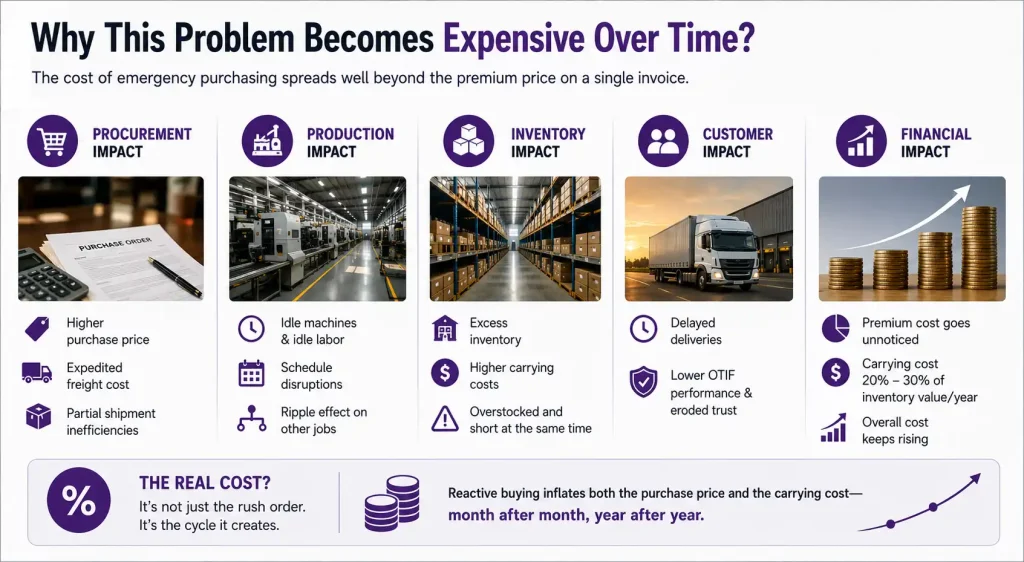
The cost of emergency purchasing spreads well beyond the premium price on a single invoice.
- Procurement impact: rush buys remove negotiating leverage. You accept the seller’s price, lose volume discounts, and forfeit better payment terms. Expedited freight and partial shipments add further cost.
- Production impact: a shortage discovered on the line means idle machines and idle labor until the material arrives. Schedules are rebuilt around the gap, which disrupts other jobs.
- Inventory impact: teams respond to repeated shortages by over-ordering everything, which raises carrying costs and creates excess stock elsewhere. The factory ends up overstocked and short at the same time.
- Customer impact: shortages push out delivery dates, which erodes on-time-in-full performance and customer trust.
Financial impact: the combined premium across hundreds of small rush orders is rarely tracked in one place, so it grows unnoticed. Carrying cost commonly runs in the range of twenty to thirty percent of inventory value per year, and reactive buying inflates both ends of that equation.
Warning Signs Procurement Leaders Should Watch For
- Buyers spend more time expediting than negotiating.
- Several purchase orders each week are marked urgent.
- Vendors know they can charge a premium because you cannot wait.
- Shortages are discovered on the line, not during planning.
- Physical stock rarely matches the system figure.
- Reorder points have not been reviewed against actual consumption in months.
How Leading Manufacturers Address This Challenge?
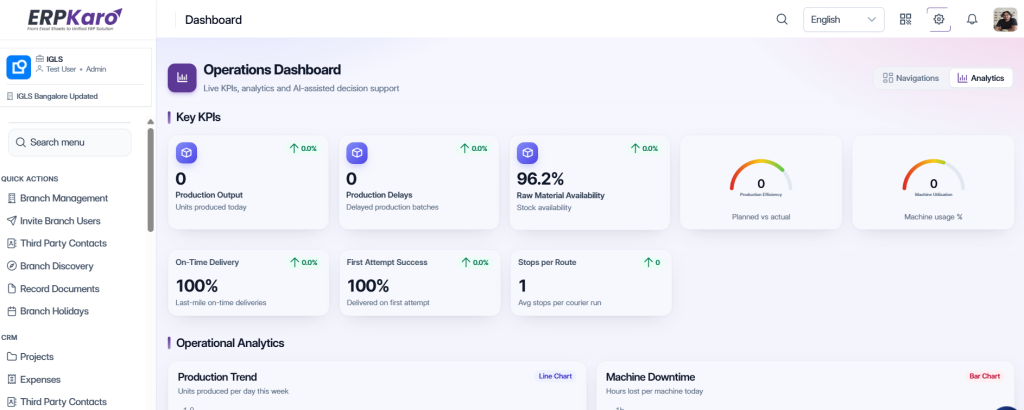
Manufacturers who control emergency buying start with visibility, not with pressure on the procurement team. They make stock figures accurate so planning works from real numbers. Additionally, they also set reorder points and safety stock from measured consumption and measured lead times, not from memory. They consolidate requirements across orders so buyers place fewer, larger, planned orders instead of many small urgent ones.
They also build a feedback loop with production and planning, so a change in the schedule reaches procurement while there is still time to buy normally. The aim is simple: see the need days ahead instead of hours ahead.
If you want to find exactly which materials are driving your emergency buys, book an ERPKaro demo for an item-level view of your reactive spend.
How Technology and ERP Systems Help
Purchase planning software closes the visibility gap that creates emergencies. Material requirement planning calculates what to buy and when from live demand and current stock, so shortages surface during planning rather than on the line. Reorder points trigger automatically as stock falls toward the buffer. Requirements consolidate across work orders, which restores volume leverage. Vendor lead times are tracked and applied, so timing is based on reality.
ERPKaro brings purchase planning, MRP, inventory management, and vendor management into one system for small and mid-sized manufacturers. For a procurement manager, the result is fewer urgent buys, lower prices, and time returned to managing suppliers rather than chasing them.
A Realistic Manufacturing Example
Consider a mid-sized sheet metal manufacturer running two shifts with frequent rush orders.
Before: emergency purchases ran several times a week, stock accuracy hovered near seventy-five percent, and buyers spent most of their day expediting.
Problems: shortages were found on the line, vendors charged premiums for fast delivery, and the team over-ordered other items to feel safe, which raised carrying cost.
Actions taken: the manufacturer improved stock accuracy, set reorder points from real consumption and measured lead times, and linked purchasing to live demand through MRP.
Results: over two quarters, the share of emergency purchases fell sharply, material premiums dropped, and buyers shifted time toward vendor negotiation. These figures illustrate the typical pattern rather than a guaranteed result.
Key Metrics Every Procurement Leader Should Track
- Emergency purchase frequency and share of total orders
- Price premium paid on rush orders versus planned orders
- Procurement lead time, planned versus actual
- Stock accuracy (physical versus system)
- On-time vendor delivery performance
- Carrying cost as a share of inventory value
Key Takeaways
Emergency purchasing is the price a factory pays for poor visibility. It is expensive precisely because it hides across many small invoices and staff hours. The way out is accuracy first, then reorder points and lead times built from real data, then planning linked to demand. Most rush buys are preventable once procurement can see the need in advance.
Conclusion
Reactive buying does not stay flat as a business grows. More orders, wider product mix, and longer supply chains all multiply the chances of a shortage, so the emergency cycle gets more expensive every quarter. Acting now, while the pattern is still visible, is far cheaper than letting it compound.
If unplanned purchasing is inflating your material cost and consuming your team, book a personalized ERPKaro demo to see how manufacturers cut emergency buying and regain control of procurement.
Frequently Asked Questions
What counts as an emergency purchase?
An emergency purchase is any unplanned buy made to keep production running, usually at short notice and a higher price. It typically skips normal approval, uses whichever vendor can deliver fastest, and is triggered by a shortage discovered on the line rather than during planning.
Why does emergency purchasing cost so much more?
Short lead times remove negotiating leverage, so you pay premium rates, expedited freight, and sometimes overtime. You also lose volume discounts and better payment terms. The hidden cost is the staff time spent chasing vendors instead of managing planned procurement.
Can a small factory realistically cut emergency buying by 60%?
Yes, when the root cause is poor visibility rather than genuine demand shocks. Accurate stock figures, reorder points tied to real consumption, and reliable lead times remove most preventable shortages. The exact reduction varies, but a large share of emergency buys is avoidable.
How does purchase planning software help procurement teams?
It links purchasing to actual demand and live stock, flags items approaching reorder points, and consolidates requirements across orders. Procurement shifts from reacting to shortages to placing planned orders early, which lowers cost and frees time for vendor negotiation.
Will reducing emergency buys risk stockouts?
No, if reorder points and safety stock are set from real consumption and lead times. The goal is to replace last-minute firefighting with planned replenishment, which actually lowers stockout risk because shortages are seen days in advance rather than on the line.
Related reading
Tired of last-minute buying at premium prices? Book an ERPKaro demo to see how purchase planning turns reactive procurement into planned, lower-cost buying.